
Half of Germans now use AI chats instead of classic search – and while marketing teams invest in GEO-optimized content, many overlook a critical prerequisite: whether your server actually responds fast enough when an AI crawler arrives. This article shows what technical requirements you must meet for your GEO measures to work effectively – and how CodaAI handles the content side once the technical foundation is in place.
Two Types of AI Crawlers – and Why the Difference Determines Your Ranking
Not all AI crawlers work the same way. The critical difference lies in time pressure – and it has direct consequences for your AI visibility.
Type 1: Training and Indexing Crawlers
GPTBot from OpenAI, ClaudeBot from Anthropic and PerplexityBot systematically collect web content to train language models or build search machine databases. These bots have no acute time pressure: if they can’t get through today, they’ll try again tomorrow. For them, response times are less critical – what matters is that they’re not blocked by robots.txt.
Type 2: Real-Time Retrieval Crawlers
ChatGPT-User, Claude-User and similar bots become active when a user asks a question in real-time and the system retrieves current web content. This is called Retrieval Augmented Generation (RAG): the AI system recognizes that its training data is insufficient and retrieves live sources – while the user waits.
Here, server speed becomes a hard AI ranking metric. If your server takes longer than around 500 milliseconds to respond, the system simply chooses a faster source. The user doesn’t notice, and your company doesn’t appear in the answer.
The Blind Spot of Most GEO Strategies
Classic SEO measures PageSpeed for human users. AI crawlers behave differently: GPTBot can make over 30 requests per second to different URLs on a domain. This means even a server with decent average performance can struggle under this load – and fail precisely when a real-time crawler is waiting for a response.
Moreover: even if the server responds fast enough, content ultimately determines whether your company is cited as a source in the AI response. Technical performance is the entry ticket – GEO-optimized content is the actual ticket. Both must be right.
Why Server Response Times Are Critical for AI Visibility
TTFB (Time to First Byte) is the time between sending an HTTP request and receiving the first byte of the server response. For classic SEO, Google’s recommendation is: under 600ms is acceptable, under 200ms is good.
AI crawlers have stricter standards. According to research by Am I Cited, websites with TTFB under 200ms achieve 40–60% higher citation rates in AI-generated responses compared to sites with TTFB between 500 and 1,000ms. Every 100ms improvement in TTFB correlates measurably with higher AI crawler success rates.
The reason lies in the architecture of RAG systems: they have internal timeout windows of typically 5–10 seconds for a complete page load. If a substantial portion is already consumed at first byte, the risk increases that the system aborts and switches to the next source.
Core Web Vitals and AI Visibility Are Connected
Websites with “Good” Core Web Vitals ratings – meaning LCP under 2.5 seconds and TTFB under 200ms – consistently appear more frequently in Google AI Overviews than structurally similar content on slower servers, according to research by Fiveblocks. This means: whoever has invested in performance for classic SEO automatically benefits from AI visibility too. Those who haven’t now pay double: worse Google rankings and lower citation rates in AI responses.
The 5 Most Important Technical Measures for AI Crawler Performance
These measures can be implemented regardless of your CMS or hosting provider and are ordered by effort-to-benefit ratio.
1. Enable CDN and Server-Side Caching
A Content Delivery Network (CDN) is the most effective single measure for TTFB improvements. CDNs like Cloudflare, AWS CloudFront or Fastly deliver cached content from edge servers positioned geographically close to requesting bots. For AI crawlers, which often operate from US data centers, this can bring TTFB reductions of 200–400ms.
Additionally, server-side caching (such as Redis, Varnish or CMS-native page cache solutions) prevents a full database query from running on every crawler request. With 30 GPTBot requests per second, an uncached WordPress blog can quickly become overwhelmed.
2. Configure robots.txt Strategically
The robots.txt is your website’s gatekeeper protocol for all crawlers – and an often underestimated GEO lever. The central strategic decision: which bots do you let in, and for what purpose?
For most B2B companies, the following basic configuration is recommended:
# Classic search engines – always allowed
User-agent: Googlebot
Allow: /

# Training crawlers – depending on strategy
User-agent: GPTBot
Allow: /

User-agent: ClaudeBot
Allow: /

# Real-time retrieval – always allow for AI visibility
User-agent: ChatGPT-User
Allow: /

User-agent: Claude-User
Allow: /

User-agent: PerplexityBot
Allow: /
Important: Since August 2025, the EU AI Act requires GPAI providers to legally respect robots.txt opt-outs. This gives companies, for the first time, a solid legal basis to control training crawling selectively – without sacrificing real-time crawling visibility.
3. Implement llms.txt
llms.txt is a newer standard (comparable to robots.txt, but for AI models) that you place in your website’s root directory. It lists which pages and documents are particularly relevant for AI crawlers – with brief descriptions and direct URLs.
A simple example:
# My Company
> B2B software for manufacturing companies in the DACH region.

## Main Pages
- [About Us](https://www.example.com/about-us/): Company, team, history
- [Services](https://www.example.com/services/): Product portfolio
- [Blog](https://www.example.com/blog/): Technical articles on Industry 4.0
For Astro, Next.js or other static site frameworks, llms.txt can be implemented as an API endpoint that automatically includes all current pages with every build.
4. Analyze Server Logs
Before investing, you need to know what’s currently happening. Analyze your server logs from the last 30 days for the following bot user-agents:
GPTBot– OpenAI training crawlerChatGPT-User– OpenAI real-time crawlerClaudeBot– Anthropic training crawlerClaude-User– Anthropic real-time crawlerPerplexityBot– Perplexity crawlerMeta-ExternalAgent– Meta AI crawler (new since 2024, now a regular sight in server logs)
Important metrics: number of crawl requests, average response time per bot, HTTP status codes (5xx errors are a warning sign), crawled URLs.
5. Structured Data and Schema Markup
AI crawlers parse pages faster and more reliably when semantic structure is present via Schema.org markup. Particularly relevant for B2B websites:
Article– for blog posts and specialist articlesFAQPage– for FAQ pages (direct citation through AI Overviews)Organization– for company pagesHowTo– for guides and step-by-step instructions
Combined with fast server performance, structured markup gives AI crawlers the complete signal package: “This content is reliable, well-structured and fast to retrieve.”
The Usual Approach: From Assessment to Implementation
The typical starting point: a B2B company barely appears in ChatGPT responses for its core topics – even though Google rankings are solid. The work then runs in three steps.
Assessment: measure TTFB, check whether a CDN is active, review robots.txt for AI crawler entries, and filter the server logs for bot user-agents.
Measures: put a CDN in front of the site and enable server-side caching, configure robots.txt for the most important AI crawlers, add an llms.txt listing the most relevant specialist articles, and add Article and FAQ schema to blog posts.
Check: evaluate the server logs again – are regular ChatGPT-User and Claude-User crawls showing up now? In addition, AI monitoring tools (like AmICited.com) can track whether the brand is being mentioned in AI responses.
This approach illustrates GEO’s two-pillar principle: technical infrastructure is the prerequisite for AI crawlers to even access your content. But what they find there – whether fact-dense, directly structured, well-sourced – determines citation. This second part is precisely what CodaAI handles for B2B companies.
How to Measure Your Current AI Crawler Performance
Before investing in optimizations, a baseline assessment is worthwhile. It shows whether AI crawlers are accessing your website at all – and how quickly they’re being served.
Step 1: Evaluate Server Logs
Download your web server’s access logs from the last 30 days and filter for known AI crawler user-agents. On Linux/macOS, this works with a simple grep command:
grep -E "GPTBot|ChatGPT-User|ClaudeBot|Claude-User|PerplexityBot|Meta-ExternalAgent" access.log | wc -lWhat you should look for: how many requests come from which bot? Which HTTP status codes are returned? What’s the average response time? Are 429 (Too Many Requests) or 503 (Service Unavailable) errors accumulating?
If you see no AI crawler entries in your logs at all, there are two possible causes: either your robots.txt blocks these bots, or your website simply hasn’t been crawled yet. Both can be fixed.
Step 2: Measure TTFB
Tools like WebPageTest or the Chrome DevTools Network panel measure TTFB for individual pages. For a realistic assessment, test from different locations – since AI crawlers often operate from US data centers, transatlantic TTFB is particularly relevant.
As a guideline: TTFB over 600ms from the US suggests missing CDN or inadequate server-side caching. That’s your first starting point.
Step 3: Check Crawlability
Use the Google Search Console URL Inspection Tool or dedicated AI crawlability checkers like AmICited.com to verify whether your most important pages are fundamentally crawlable. Common errors: accidental noindex tags, faulty canonical references or robots.txt rules that unintentionally block AI crawlers.
What Changes Concretely for Mid-Market Companies
The shift toward AI-powered search has reached Germany. According to Bitkom (2025), half of Germans already use AI chats instead of or in addition to classic search. 67% of the population aged 16+ use generative AI at least occasionally – a year ago it was still 40%.
For B2B companies, this means: the decision-makers researching your products and services are increasingly asking ChatGPT or Perplexity – not a search engine. Whoever doesn’t appear in these responses loses visibility with a growing group of potential customers.
The critical difference from classic SEO: while Google rankings take weeks or months to shift, AI crawler optimizations are technical in nature and show results as soon as the next crawl cycle runs.
The Underestimated Speed Advantage for Mid-Market Companies
Larger corporate websites often struggle with technical debt, legacy CMS and bureaucratic update cycles. A mid-market company with modern infrastructure (or willingness to adapt it quickly) can catch up in AI visibility much faster than in classic Google rankings.
GEO-Optimized Content: What AI Crawlers Really Cite
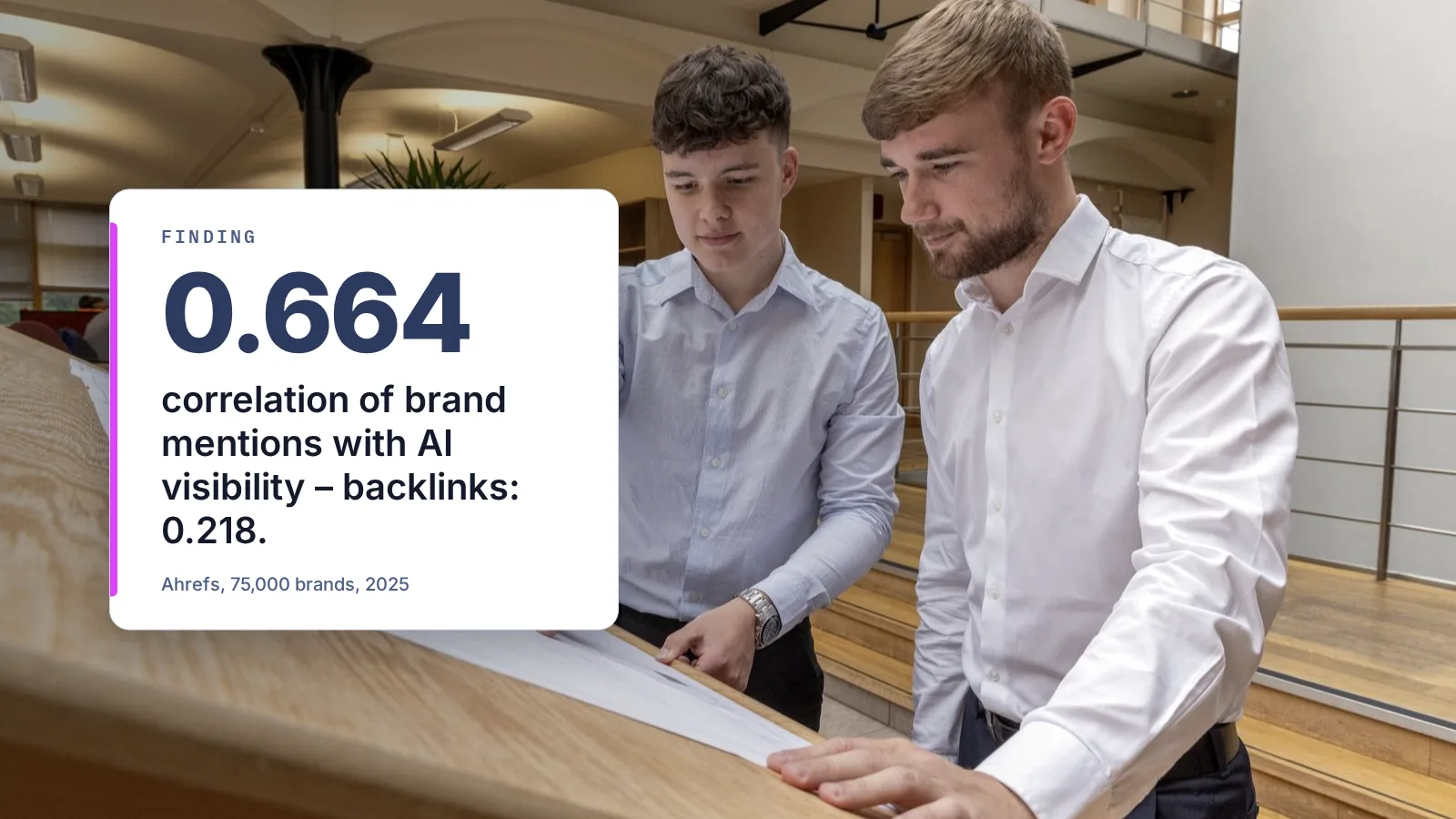
A common misconception: whoever ranks well on Google will also be cited by AI search machines. That’s only partially true. Classic SEO optimizes for backlinks, domain authority and keyword relevance. AI crawlers, by contrast, prioritize four content criteria – and these determine CodaAI’s editorial approach:
Factual Density: AI models prefer content with concrete numbers, data and verifiable statements. General introductory texts without substance are rarely cited. CodaAI articles are systematically backed by verified statistics from German sources (Bitkom, Statista DE, Fraunhofer).
Direct Answer Structure: Sections beginning with a clear answer to an implicit question are more frequently used as sources than texts that deliver the core only after lengthy introductions. In CodaAI format, this is a structural requirement, not optional.
Source Quality: AI models evaluate which external sources an article cites. Linking to professional associations and scientific studies signals reliability – to algorithmic systems as well.
Freshness: AI crawlers prioritize fresh content. A 2019 article has worse chances than one from 2025, even if the older one goes deeper. Regular updates with new updatedDate in the frontmatter are therefore sensible.
These four factors can be implemented alongside technical performance measures – they’re not either-or, but two halves of the same GEO strategy.
Checklist: AI Crawler Readiness in 30 Minutes
Use this quick check before undertaking larger measures:
Technical Foundation:
-
robots.txtcontains explicit entries for GPTBot, ClaudeBot, ChatGPT-User, Claude-User, PerplexityBot - Server logs show AI crawler access (no complete block)
- TTFB under 500ms (measured from the US)
- CDN active or planned
Content Foundation:
- Important pages have schema markup (Article, FAQ, Organization)
-
llms.txtin root directory, present or planned - Specialist articles begin with direct answer sentences, not general introductions
- External, reliable sources linked (professional associations, studies, authorities)
- GEO-optimized content process established – or partner like CodaAI engaged
Monitoring:
- Process for regular log analysis established (monthly)
- AI mention monitoring set up (for example via AmICited or Perplexity search for your brand)
Whoever can check all ten points has a solid foundation for AI visibility – regardless of how the AI search machine landscape evolves. The points can be prioritized: technical foundation first, content optimization second, monitoring as an ongoing process.
Technical Foundation Is In Place – Now Comes the Content
The measures described in this article – CDN, TTFB under 200ms, correct robots.txt, llms.txt – are the prerequisite for AI crawlers to reliably index your website at all. They open the door. But what’s behind the door determines whether your company appears in an AI assistant’s response.
This is where most B2B companies hit a stumbling block: producing GEO-optimized content requires a different editorial approach than classic SEO writing. Each section must begin with a direct answer. Statistics must be verifiable. The summary field must be worded so ChatGPT can use it verbatim as a response. FAQ structures must answer real user questions, not marketing phrases.
CodaAI covers precisely this second part – and is thus the natural next step once the technical foundation is in place. Specialist articles are backed by verified German sources, built in the right structure for AI visibility, and delivered directly in the format your Astro, WordPress or any other CMS can use immediately. No agency briefing, no weeks-long editorial process.
Technical Foundation + GEO-Optimized Content = AI Visibility. Whoever approaches both systematically is already one decisive step ahead of the majority of German B2B websites today.
Want to know whether ChatGPT and Google AI Overviews already mention your company? The free AI visibility check shows you in seconds, no sign-up required. What an ongoing programme with expert articles costs is listed transparently on our pricing page.